
High Pressure Casting
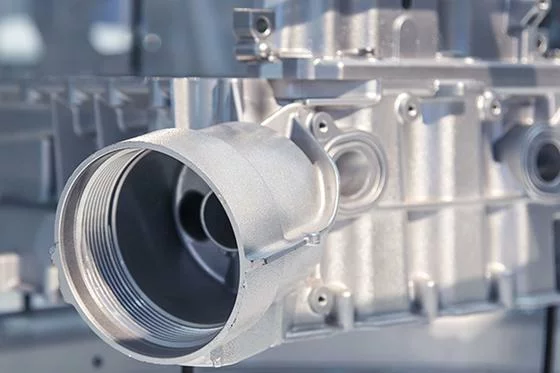
High Pressure Die Casting
High-pressure die casting (HPDC) is a manufacturing process used to produce intricate and detailed metal parts with high dimensional accuracy. This process involves injecting molten metal into a steel mold cavity at high pressures, typically ranging from 10,000 to 30,000 psi (pounds per square inch). The mold is designed to shape the metal into the desired form as it cools and solidifies, resulting in a finished product with tight tolerances and excellent surface finish.
Here are some key points about high-pressure die casting and its uses:
-
Process Overview: HPDC begins with the preparation of the die, which consists of two halves (the cover die and ejector die) that are precisely machined to create the desired part geometry. The molten metal, usually aluminum or zinc alloys due to their excellent castability, is then injected into the die cavity under high pressure using a hydraulically operated machine.
-
Benefits of HPDC:
- High Precision: HPDC enables the production of complex parts with tight tolerances, making it suitable for applications where precision is critical.
- High Production Rates: The rapid cooling and solidification of the metal in the die allow for quick cycle times, making HPDC suitable for high-volume production.
- Excellent Surface Finish: The use of high pressures helps in achieving smooth and defect-free surface finishes on the cast parts.
- Material Flexibility: While aluminum and zinc alloys are commonly used, HPDC can also work with other metals like magnesium, copper, and brass.
-
Applications:
- Automotive Industry: HPDC is extensively used in the automotive sector for manufacturing engine components, transmission parts, chassis components, and structural elements due to its ability to produce lightweight yet strong parts.
- Consumer Electronics: The process is used to make casings, housings, and other components for electronic devices like laptops, smartphones, and tablets.
- Industrial Equipment: Many industrial machines and equipment rely on HPDC for producing precision parts that meet strict performance criteria.
- Aerospace and Defense: HPDC is employed in manufacturing aircraft components, missile parts, and defense equipment where lightweight and high-strength materials are crucial.
- Appliances: HPDC is used in the production of parts for appliances such as refrigerators, air conditioners, and washing machines.
-
Advancements in HPDC:
- Simulation and Modeling: Computer-aided engineering (CAE) software is used to simulate the die casting process, optimizing designs and reducing defects.
- Alloy Development: Ongoing research focuses on developing new alloys with improved properties such as higher strength, better corrosion resistance, and enhanced thermal conductivity.
- Automation: Automation and robotics are increasingly integrated into HPDC operations to enhance efficiency, reduce labor costs, and improve overall consistency in part quality.
