
Gravity Die Casting
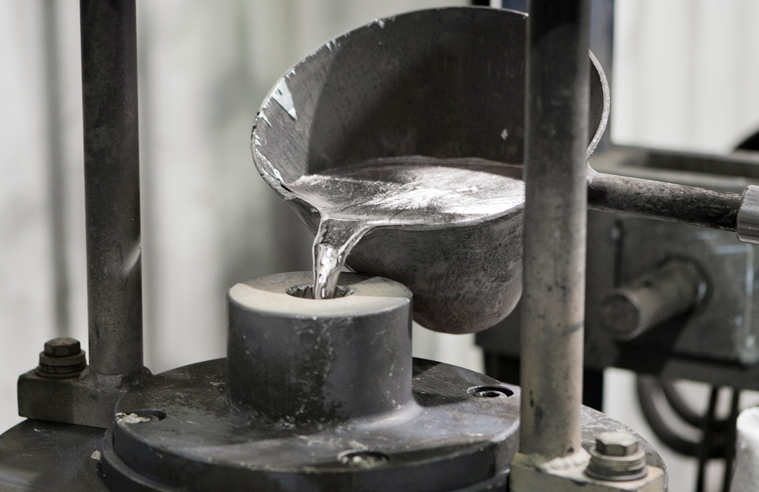
Gravity Die casting
Gravity die casting is a metal casting process used to produce complex, high-quality metal parts. It involves pouring molten metal into a reusable metal mold (die) under the force of gravity, hence the name. This process is commonly used for manufacturing components with intricate shapes and tight tolerances. Here’s a breakdown of gravity die casting and its uses:
Gravity Die Casting Process:
-
Die Preparation: The process begins with the creation of a metal die, typically made from steel or iron. The die is designed to match the final shape of the desired part.
-
Preheating: The die is preheated to a specific temperature to improve metal flow and reduce solidification time.
-
Metal Melting: The metal, often aluminum, magnesium, or zinc alloys, is melted in a furnace at the desired temperature.
-
Pouring: Once molten, the metal is poured into the preheated die. Gravity aids in filling the die cavity completely.
-
Solidification: The metal solidifies inside the die cavity, taking the shape of the mold.
-
Cooling and Ejection: After solidification, the part is cooled within the die to ensure proper metallurgical properties. The casting is then ejected from the die, revealing the final product.
Uses of Gravity Die Casting:
-
Automotive Industry: Gravity die casting is widely used in the automotive sector to manufacture engine components, gearbox parts, suspension components, and structural parts. The process offers high strength-to-weight ratios, which are crucial for automotive applications.
-
Aerospace Industry: In aerospace, gravity die casting is employed to produce intricate and lightweight components such as aircraft engine parts, structural components, and aerospace alloys.
-
Industrial Machinery: Components for industrial machinery, including pumps, valves, and hydraulic parts, often benefit from gravity die casting due to its ability to create complex shapes with tight tolerances.
-
Consumer Electronics: The process is utilized in manufacturing consumer electronics like laptop casings, camera components, and smartphone parts due to its cost-effectiveness and ability to produce parts with excellent surface finish.
-
Medical Equipment: Gravity die casting is also used in the medical industry for producing equipment and devices such as surgical instruments, medical imaging components, and prosthetic parts.
-
Lighting Fixtures: Many lighting fixtures, including outdoor lamps, streetlights, and architectural lighting components, are manufactured using gravity die casting due to the process's efficiency in creating intricate designs.
-
Sporting Goods: Parts for sporting goods such as bicycle components, golf club heads, and firearm parts are often made through gravity die casting for their durability and performance characteristics.
